
Local news
Walnut Creek Expands Adaptive Signal Timing Along Ygnacio Valley Road to Ease Commute Bottlenecks
Municipal transportation division installs AI optical sensors and dynamic coordination across eighteen intersections from I-680 to Cowell Road.
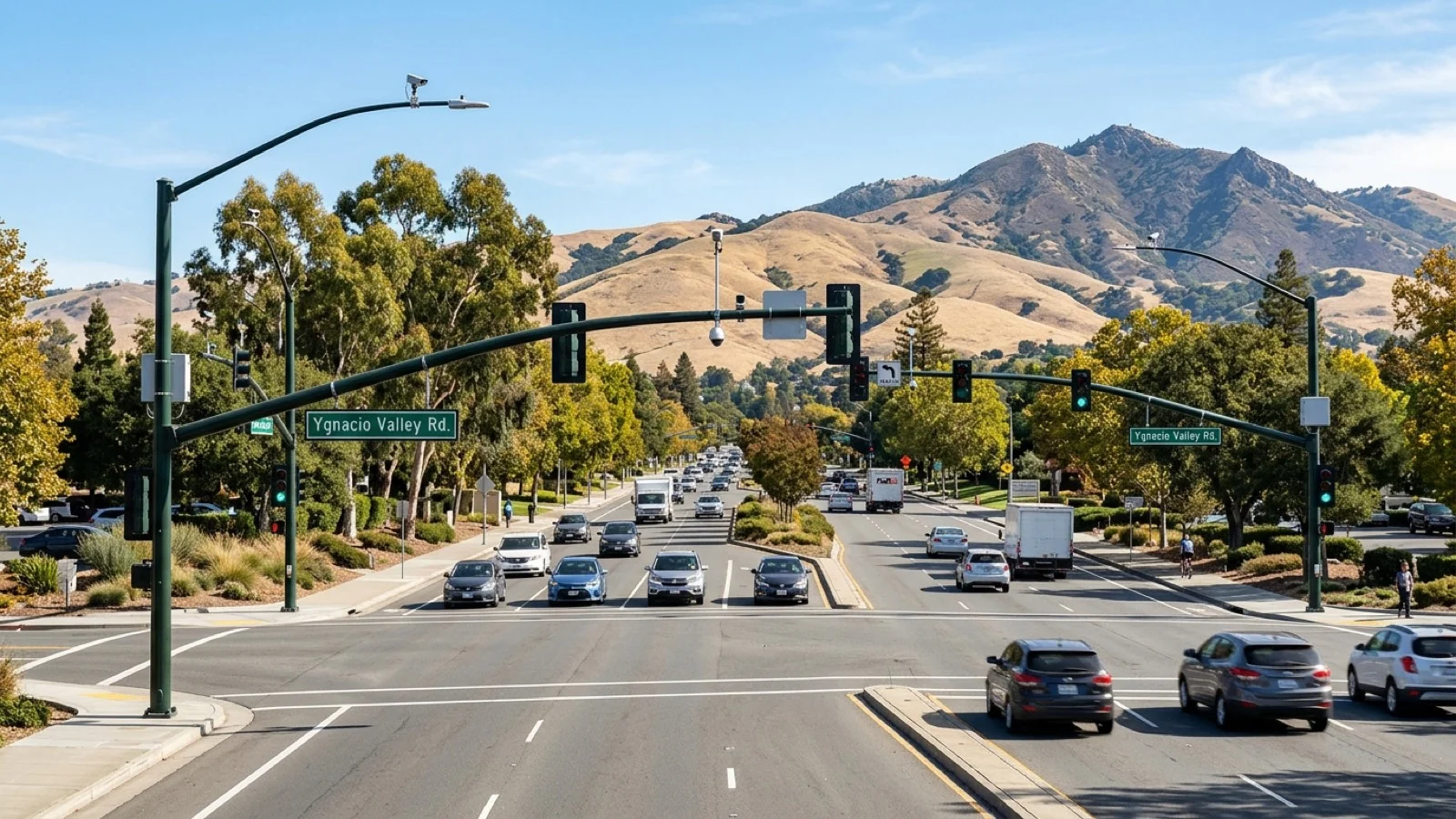
City of Walnut Creek traffic engineers on Monday activated new adaptive signal timing software across eighteen major intersections along Ygnacio Valley Road, deploying machine-learning algorithms to relieve chronic morning and evening peak congestion.
As the primary east-west arterial connecting Clayton, Concord, and eastern suburbs to the Interstate 680 corridor and downtown BART, Ygnacio Valley Road carries more than 52,000 vehicles daily. Commuters have long endured frustrating stop-and-go delays near Marchbanks Drive and Civic Drive, where static timer cycles frequently failed to adjust for unexpected highway spillover or school zone surges across Central Contra Costa.
The $1.4 million arterial upgrade was funded jointly through Contra Costa Transportation Authority Measure J sales tax revenue and municipal transportation capital reserves. High-definition thermal camera arrays installed at each junction continuously feed vehicle volume, pedestrian crosswalk actuation, and cyclist queue data into the city's central traffic management operations center.
The smart signal system utilizes edge-computing processors to analyze traffic queue depths in real time, dynamically extending green light phases for the busiest directional movements without causing cross-street gridlock. Traffic Engineering Manager Jeremy Brooks told the City Council Transportation Commission that preliminary corridor testing demonstrated a twelve percent reduction in total travel delay and an eight percent decrease in vehicle emissions.
The intelligent system automatically provides transit signal priority for County Connection express buses, ensuring scheduled arrivals during congested commute windows in Walnut Creek. Contra Costa Transportation Authority directors noted that regional arterial corridors like Ygnacio Valley Road handle significant traffic diverted from congested regional freeways during peak commute hours.
Walnut Creek engineers will monitor traffic pattern telemetry over a sixty-day calibration period and fine-tune signal cycle offsets based on public feedback and seasonal holiday shopping volumes. Motorists and neighborhood residents can review real-time corridor metrics and submit intersection observations via the city's online traffic dashboard. Contra Costa Transportation Authority planners highlighted that intelligent corridor management reduces greenhouse gas emissions while saving local commuters hundreds of cumulative travel hours each month. Walnut Creek public works crews will coordinate ongoing signal sensor maintenance with Caltrans district technicians to maintain seamless interchange coordination near the Interstate 680 on-ramps.
Comments (0)
No comments yet. Be the first to share a thought on this story.