
Local news
Contra Costa Transportation Authority Outlines $14M Signal Synchronization for Ygnacio Valley
Artificial intelligence timing sensors and transit signal priority will connect thirty-four intersections across Walnut Creek and Concord.
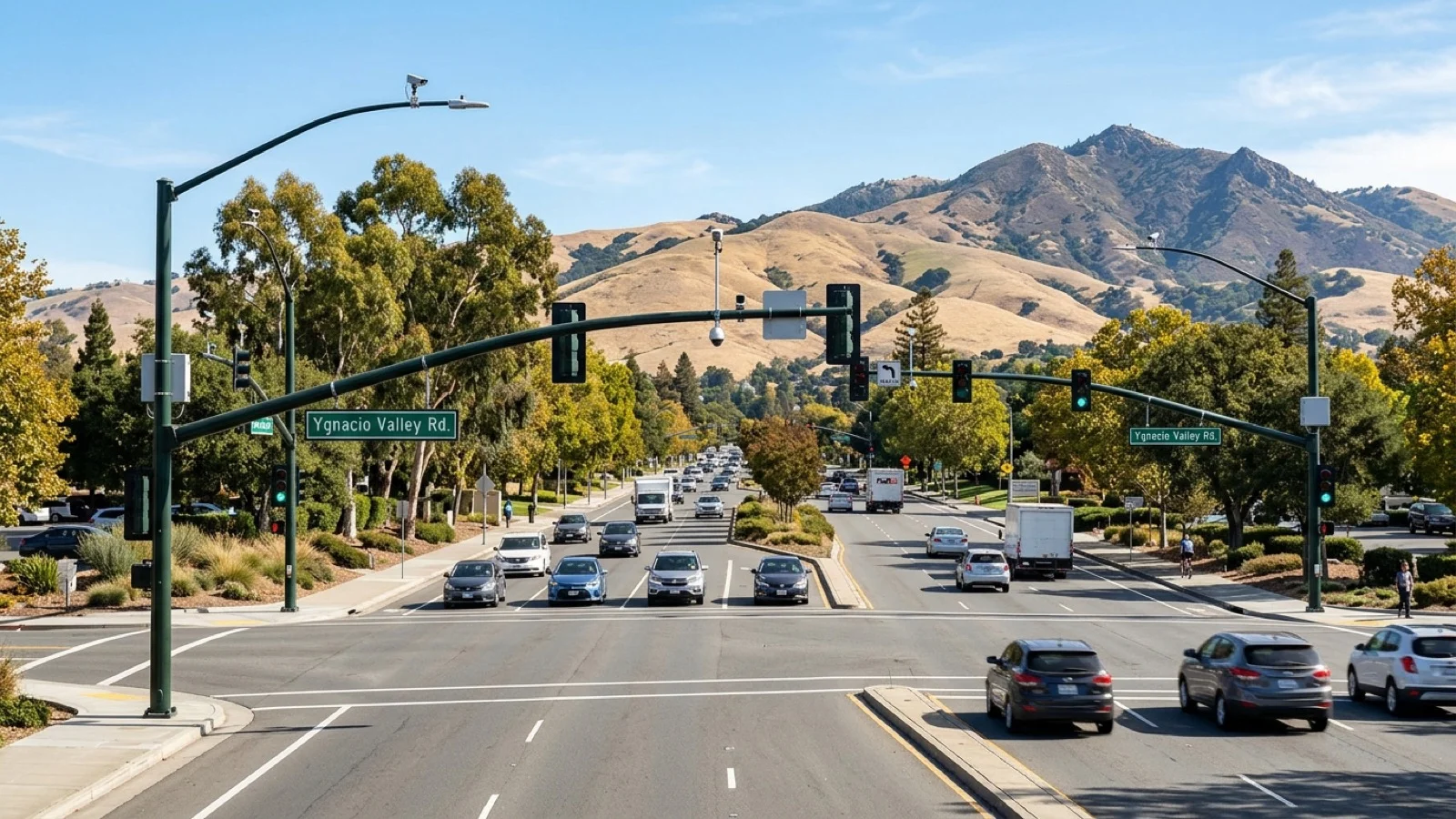
The Contra Costa Transportation Authority unveiled an ambitious $14 million intelligent traffic management program on Sunday, detailing comprehensive signal synchronization and fiber-optic sensor installations across thirty-four intersections spanning the heavily traveled Ygnacio Valley Road arterial between Walnut Creek and Concord. The capital project aims to reduce peak-hour congestion by eighteen percent and significantly curtail greenhouse gas emissions from idling vehicles.
The initiative combines Measure J voter-approved transportation sales tax revenues with federal clean-air grants to upgrade decades-old traffic controllers to adaptive artificial intelligence processors. These modern systems dynamically adjust green-light splits based on real-time traffic flow, pedestrian calls, and emergency vehicle preemption requests rather than relying on static pre-programmed time clocks.
Walnut Creek municipal traffic engineers reported that Ygnacio Valley Road accommodates more than 48,000 vehicle trips each weekday, serving as a primary link between residential neighborhoods in Clayton, Concord, and Interstate 680. The upgraded corridor will also feature dedicated transit signal priority for County Connection Route 7 and Route 93X buses, enabling commuter buses to maintain schedule reliability during heavy commute hours.
The CCTA board will formalize contractor bid awards during its regular public meeting on October 28, with initial field installations beginning in January 2027. Project managers confirmed that lane closures will be restricted exclusively to overnight hours between 9:00 PM and 5:00 AM, ensuring unobstructed daytime traffic flow for Walnut Creek commuters and John Muir Health medical campus visitors.
Transit advocacy groups throughout Contra Costa praised the inclusion of real-time bus preemption sensors, emphasizing that reliable transit travel times encourage commuters to choose public transit over single-occupancy vehicles. The synchronized fiber network will also connect directly to Walnut Creek's downtown traffic operations center, allowing engineers to manually override timing sequences during special events at the Lesher Center for the Arts and seasonal festivals at Broadway Plaza.
Environmental planners noted that reducing vehicle stop-and-go cycles along the five-mile corridor will eliminate an estimated 1,200 metric tons of carbon emissions annually. Emergency first responders from Con Fire will also benefit from automated corridor-wide green lights during code-three medical responses.
Commuters and residents along Ygnacio Valley Road, Marchbanks Drive, and Oak Grove Road are invited to attend an online informational workshop on Wednesday, November 12, at 6:00 PM. Authority engineers will demonstrate how the adaptive timing sensors operate and answer public questions regarding corridor safety improvements and pedestrian bicycle crossing phases.
Comments (0)
No comments yet. Be the first to share a thought on this story.
Request a correctionContact the newsroom
Keep reading