
Transit
BART targets 100% renewable power and station EV charging by 2035
After cutting greenhouse gas emissions by nearly 70 percent over the past decade, transit agency outlines zero-carbon goals for Walnut Creek and East Bay stations.
Your listening Queue & catch up
Add a story or build a catch-up queue to start listening.
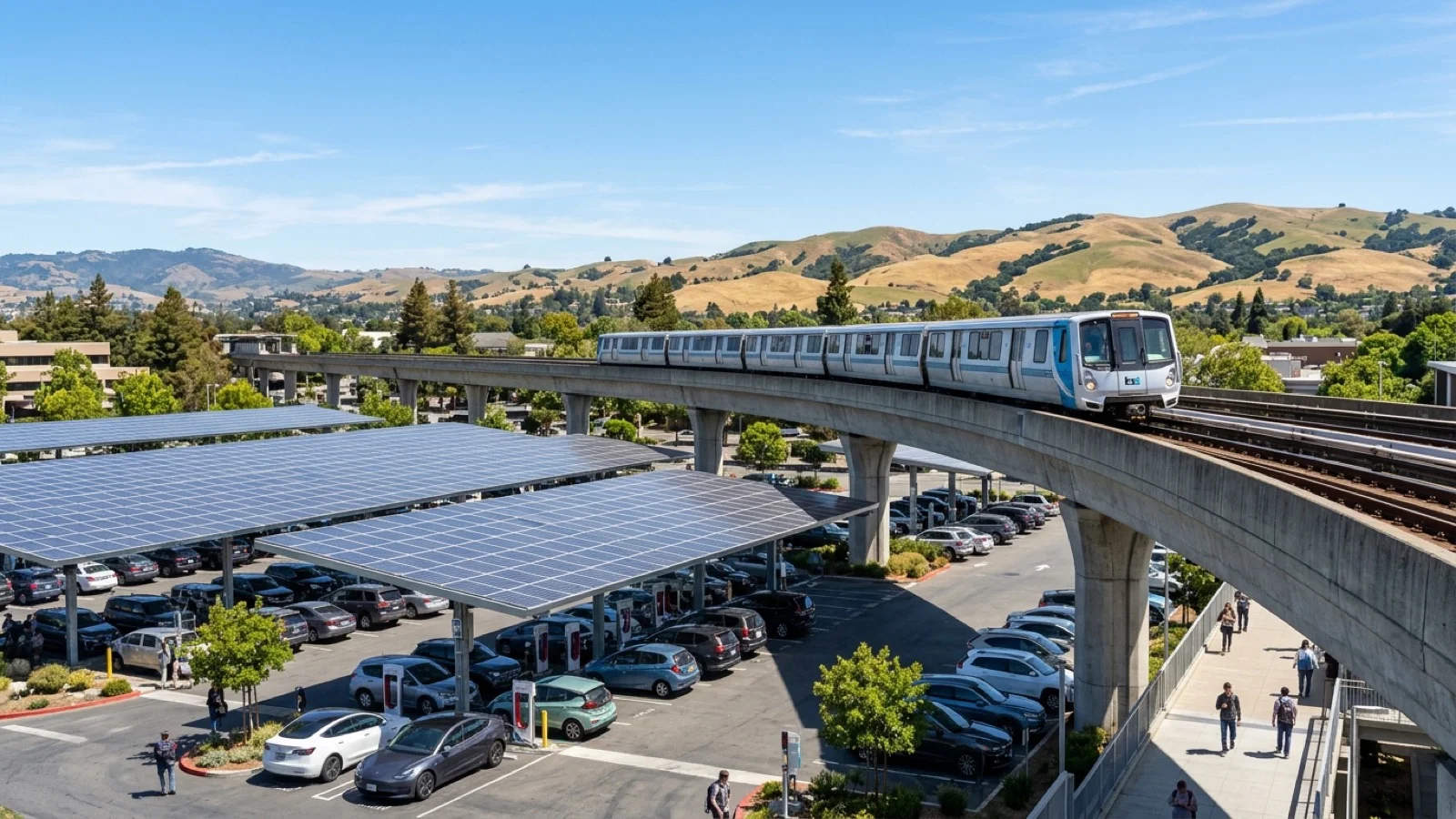
Commuters boarding Yellow Line trains at the Walnut Creek and Pleasant Hill/Contra Costa Centre stations are riding a transit network that has slashed its operational carbon footprint by nearly 70 percent over the past decade, a milestone anchoring the newly released 2026–2035 Sustainability Action Plan from Bay Area Rapid Transit (BART). Presented to the BART Board of Directors in October 2026, the ten-year environmental blueprint charts concrete engineering targets for clean electricity procurement, zero-emission station access, water conservation, and climate resilience across Contra Costa and Alameda counties.
Environmental compliance engineers at BART attributed the dramatic 70 percent ten-year drop in greenhouse gas emissions to two primary investments: transitioning the agency's wholesale traction-power portfolio to hydro, solar, and wind energy contracts, and retiring legacy railcars in favor of 100 percent Fleet of the Future electric trains. Those lightweight aluminum cars use regenerative braking systems that feed kinetic energy back into the third rail whenever an Antioch- or San Francisco-bound train decelerates into stations such as Walnut Creek on Ygnacio Valley Road.
Under the 2026–2035 roadmap, BART will move from annual renewable power averages toward 24/7 hourly carbon-free electricity matching, ensuring that evening commute trains draw clean energy even after California solar generation tapers off. For central Contra Costa County riders, the plan also prioritizes expanding Level 2 electric-vehicle charging ports inside station parking garages, installing drought-tolerant native bioswales to filter parking-lot stormwater before it enters Walnut Creek watershed channels, and upgrading station ventilation filtration.
Public health and air-quality advocates noted that shifting single-occupancy Interstate 680 highway trips onto electric rail remains the single largest lever for reducing particulate matter and ozone precursors across the Diablo Valley. Residents can download the full 2026–2035 Sustainability Action Plan and check station EV charger availability online at bart.gov/sustainability.
Sources
Comments (0)
No comments yet. Be the first to share a thought on this story.